
SIMPLOT COMPANY




Project Description
Client: Simplot Company
Facility Type: Potato Processing Plant
Location: Moses Lake, Washington
Total Size: 441,803 SF Facility
Building a Cutting-Edge French Fry Facility
Designed to Push the Boundaries of Efficiency and Automation
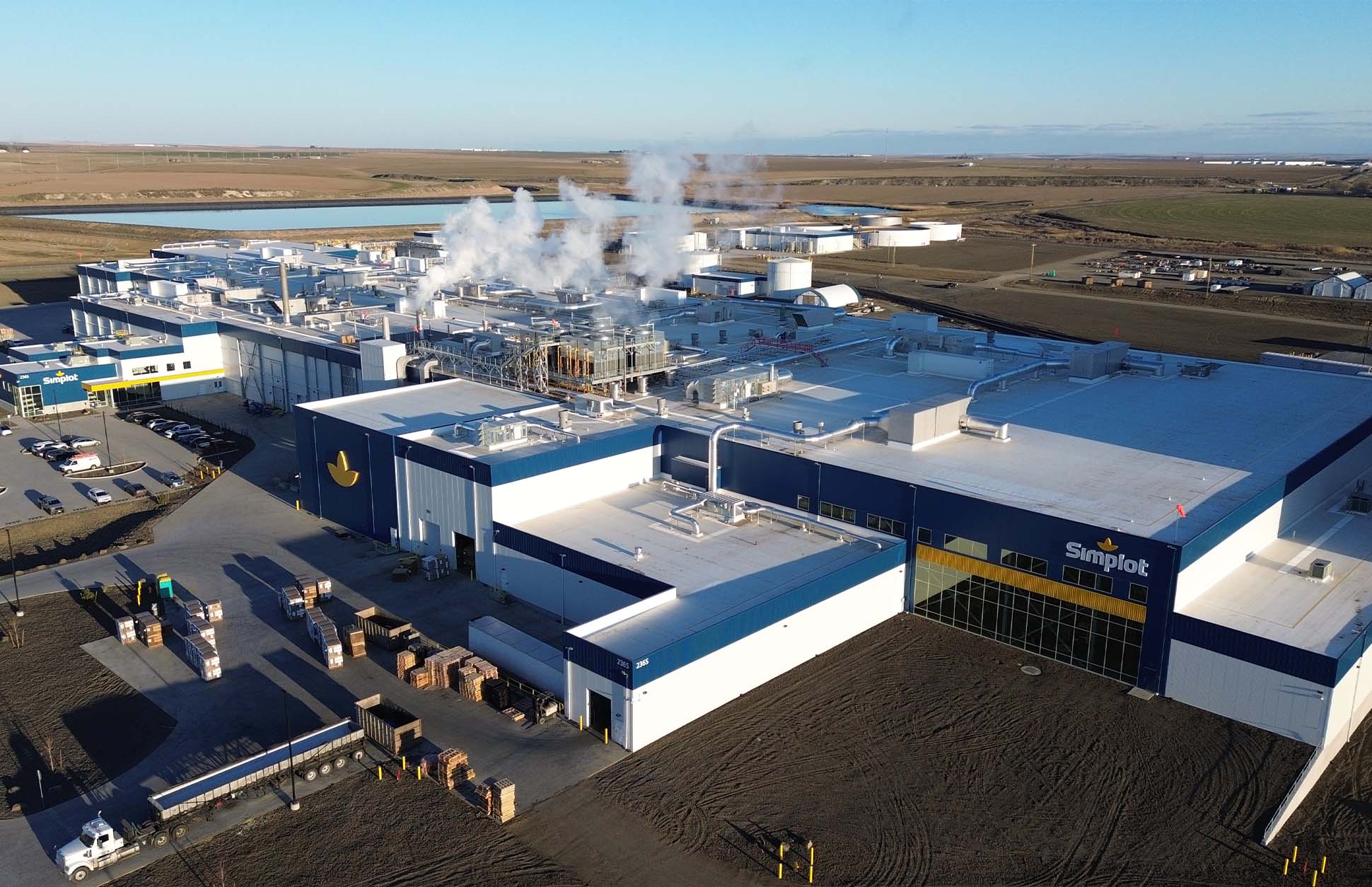
On a sprawling 94-acre site visible from I-90 in rural Washington, Simplot hired Fisher Construction Group again, to build their next state-of-the-art 441,803 square foot French fry manufacturing plant.
The plant is connected seamlessly to a 228,000 square foot ASRS freezer, with an impressive 65,000 pallet position capacity, ensuring streamlined storage and distribution for one of the industry’s most advanced processing plants set to process roughly 1.7 million pounds of potatoes per day.
As construction plans were set in motion, a major shift occurred just two months before steel fabrication and erection were scheduled to begin. The owner requested that the entire process be flipped to accommodate essential equipment needs. Despite the substantial adjustment, the Fisher team not only met the challenge but also maintained the aggressive schedule, even with a 1.5 month reduction at the owner’s request. At the peak of construction, an average of 530 field workers were working tirelessly on-site, and up to five cranes operating simultaneously to maintain the demanding pace to bring the project to completion on time.
Over 4,000 tons of structural steel was installed, forming the backbone of this massive facility. The design incorporates an exterior exoskeleton, a feature implemented to enhance the washdown procedures critical to the client’s operations to ensure that sanitation and maintenance remain efficient and effective. The complexity of the project includes three different types of concrete decks: Pre-Cast, Cast-In-Place, and Slab on Metal Deck. Also included are more than 40 stair sets, excluding catwalk equipment stairs, along with 215 man doors and 47 overhead doors.
A total of 1,414 Geopiers were installed providing necessary foundation stability. Environmental regulations required the relocation of wetlands and the creation of 1.5 times the original wetland area to comply with environmental. A monumental 900,000 tons of dirt was also moved for cut and fill operations. Additionally, 1.5 miles of new HDPE pressurized water line installed to support the plant’s extensive utility requirements.